
Underground Leak Detection: How Often Does Acoustic Detection Miss the Leak — or Send You Digging in the Wrong Spot?
Industry data shows it can happen on 25% or more of acoustic leak detection jobs. But what really matters is how often it happens to you.
Acoustic leak detection gets you close. Hydrogen tracer gas confirms the exact spot. Used together, they dramatically raise the odds that you excavate in the right place the first time.
See Hydrogen Leak Detectors Talk to a SpecialistResults vary with site conditions, pipe material, depth, equipment and operator experience. The 92–95% figure is one customer’s reported field experience, not a controlled study.
Every underground leak job ends the same way: someone has to break concrete, cut asphalt, or dig up a yard. If the leak isn’t where you marked it, you pay for it twice — in extra excavation, restoration, labor, and an unhappy customer. That’s why the best underground leak detection professionals don’t rely on a single method. They locate with one technology and confirm with another.
This guide explains how to combine acoustic leak detection with hydrogen tracer gas leak detection, when each method is strongest, and why two independent confirmations increase the probability of pinpointing the true leak location.
The added cost is minimal. Switching from straight nitrogen to forming gas adds only $45 to about $80 per cylinder, and since one cylinder covers many jobs, the extra gas cost per job is small.
The Cost of Being Wrong
A leak detection company’s product is the mark on the ground. You locate the leak; the plumber or contractor digs and makes the repair. That means every wrong mark — or every job where the leak can’t be found — lands squarely on your revenue and your reputation.
When the plumber digs where you marked and finds a dry hole, the blame comes back to you. You may end up returning for free, reducing your fee, or losing the job entirely. And in a business that runs on referrals from plumbers, insurance adjusters, and property managers, being known as the company that marked the wrong spot can cost you far more than one invoice.
Being unsure is expensive too. When a technician isn’t confident in the location, they re-listen, re-check, and second-guess before making the call. That hesitation stretches every job, hurts productivity, and limits how many jobs your team can complete in a day.
A wrong or missed locate costs you
- Free return visits and reduced or lost fees
- “No-find” jobs you can’t fully bill
- Extra hours on site re-checking the location
- Fewer completed jobs per technician per day
- Lost referrals from plumbers, adjusters, and property managers
A confirmed locate gives you
- A mark the plumber can dig on with confidence
- Shorter time on each job
- More jobs completed — and billed — every day
- Repeat referrals and a reputation for getting it right
Method 1: Acoustic Leak Detection
Pressurized water escaping from a pipe creates noise — a hiss, rush or vibration — that travels through the pipe wall, the water column and the surrounding soil. Acoustic leak detection uses sensitive ground microphones, listening sticks, or leak noise correlators to find where that sound is strongest.
Where acoustic works best
- Metallic pipe (copper, steel, ductile and cast iron)
- Pressurized water lines
- Medium to large leaks
- Quiet sites with good surface contact
- Quickly scanning long runs of pipe
Acoustic best practices
- Locate and mark the full pipe route first
- Shut off water use on site to cut background noise
- Listen at regular intervals and record readings
- Use frequency filters to separate leak noise from ambient noise
- Mark the area of peak signal — treat it as a search zone, not a final answer
Method 2: Hydrogen Tracer Gas Leak Detection
Tracer gas detection doesn’t listen for the leak — it finds the gas escaping from it. The line is filled or pressurized with a forming gas mixture of 5% hydrogen and 95% nitrogen. This mixture is non-flammable, non-toxic, and economical. Hydrogen is the smallest, lightest molecule in nature, so it escapes through even tiny leaks, rises, and permeates through soil, sand, concrete and asphalt.
A sensitive hydrogen leak detector is then swept slowly along the pipe route at ground level. The point of highest hydrogen concentration marks the leak.
Where tracer gas works best
- Plastic pipe (PVC, PEX, HDPE) where acoustics struggle
- Small, slow, or low-pressure leaks
- Noisy environments — gas isn’t affected by sound
- Lines under slabs, driveways and parking lots
- Drained or non-pressurized lines
- Buried refrigeration and HVAC line sets
Tracer gas best practices
- Isolate the line section being tested
- Introduce forming gas at a controlled, safe pressure
- Allow time for the hydrogen to reach the surface
- Sweep slowly with the probe at the surface, in cracks and expansion joints
- On hard surfaces, drill small bar holes along the route for sampling
- Follow the readings up to the peak concentration
Equipment for Hydrogen Tracer Gas Leak Detection: The Hydro-Lok™
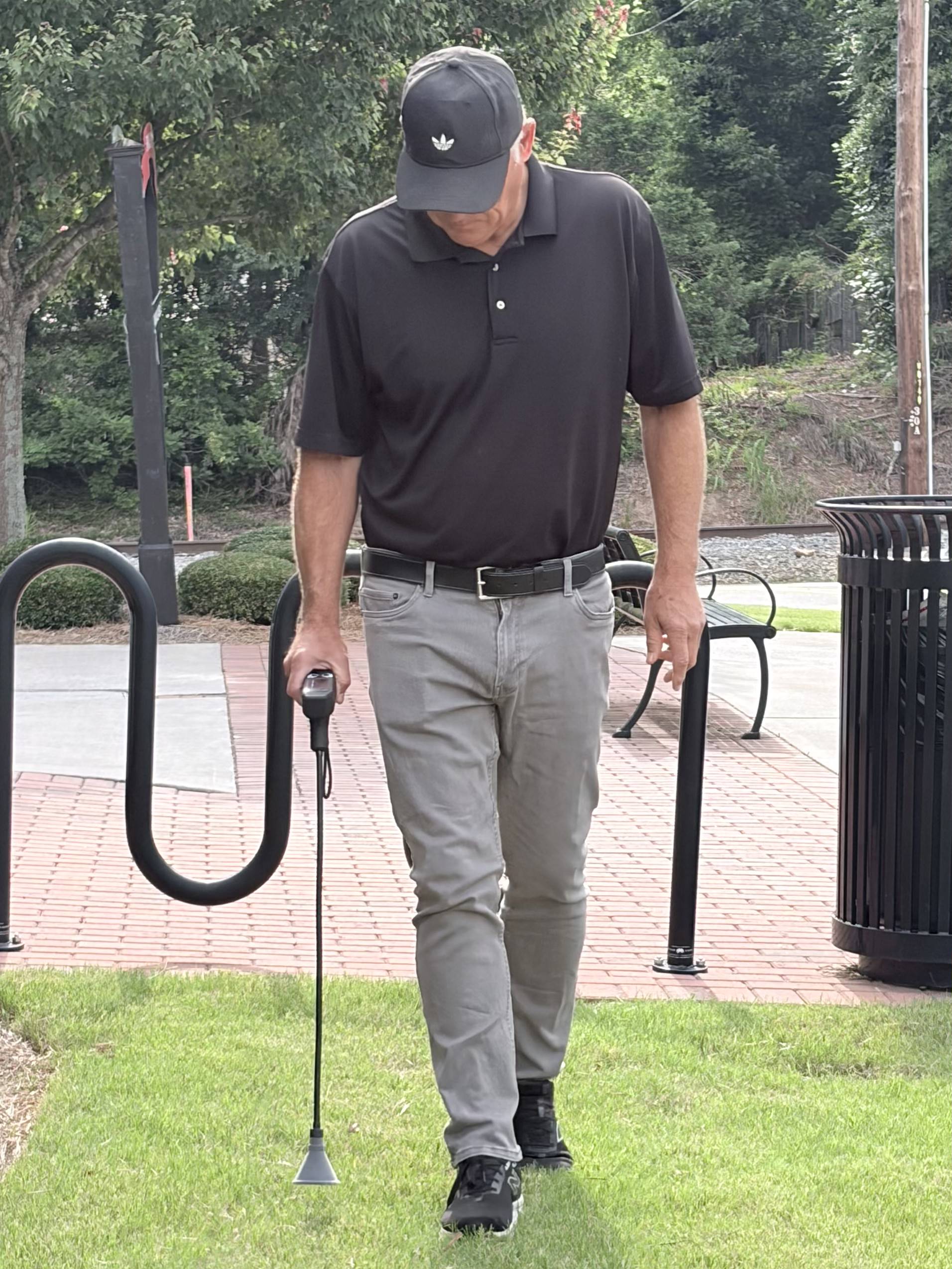
The Hydro-Lok™ is H2Leak’s compact underground leak detector, built for pinpointing leaks in buried water lines with 5% hydrogen / 95% nitrogen forming gas. Add it to the acoustic equipment you already own: one gas fill gives you both an acoustic signal and a hydrogen confirmation.
- Three sensitivity levels — search broadly, then narrow in to pinpoint
- Graduated display and an audio tone that speeds up as hydrogen is detected
- Calibrates and auto-zeros on ambient air
- Field-replaceable hose and hydrogen sensor
- Cone and pinpoint probe tips
- USB-C rechargeable, compact protective case, 12-month warranty
Acoustic vs. Tracer Gas: Side-by-Side
| Factor | Acoustic Leak Detection | Hydrogen Tracer Gas |
|---|---|---|
| Detects | Sound of escaping water | Hydrogen gas escaping from the leak |
| Metal pipe | Excellent | Excellent |
| Plastic pipe | Limited — sound is absorbed | Excellent — material doesn’t matter |
| Small / slow leaks | Can be difficult | Very effective |
| Noisy sites | Affected by background noise | Not affected by noise |
| Needs line pressure | Yes | No — gas supplies its own pressure |
| Speed over long runs | Fast | Moderate |
| Best role | Narrow the search area | Confirm the exact location |
Underground Leak Detection FAQ
What is the best method for underground leak detection?
The most reliable approach uses two independent methods: acoustic detection to narrow the search area quickly, and hydrogen tracer gas to confirm the exact spot. When both agree, the chance of digging in the wrong place drops significantly.
Is hydrogen tracer gas safe?
Yes. The standard mixture is 5% hydrogen and 95% nitrogen, which is non-flammable and non-toxic. It’s widely used for water lines, buried piping and refrigeration systems.
Does acoustic leak detection work on plastic pipe?
It’s more difficult, because plastic absorbs leak noise and the sound doesn’t travel far. Hydrogen tracer gas doesn’t depend on pipe material, which makes it the ideal confirmation method for plastic lines.
Can tracer gas find a leak under concrete or asphalt?
Yes. Hydrogen permeates through concrete, asphalt, seams and expansion joints. On thick or sealed surfaces, drilling small sampling holes along the pipe route improves results.
What if the acoustic and tracer gas results don’t match?
Treat it as a signal to investigate further — re-check the pipe route, look for multiple leaks, and sample more points. Disagreement before digging is far cheaper than a wrong excavation.
Find the Leak. Dig Once.
Add hydrogen tracer gas to your underground leak detection process and confirm every dig location. Contact H2Leak to learn how the Hydro-Lok™ fits your work.
Contact H2Leak Shop Detectors