
Refrigerant Leak Detection for Supermarkets, Grocery and Big Box Stores
Store refrigeration loses refrigerant every day through leaks too small for a nitrogen pressure test to catch. H2Leak hydrogen tracer gas and refrigerant leak detection finds them in rack systems, display cases, walk-ins and rooftop units, so you buy less refrigerant, stay inside EPA leak limits and hit your sustainability goals.
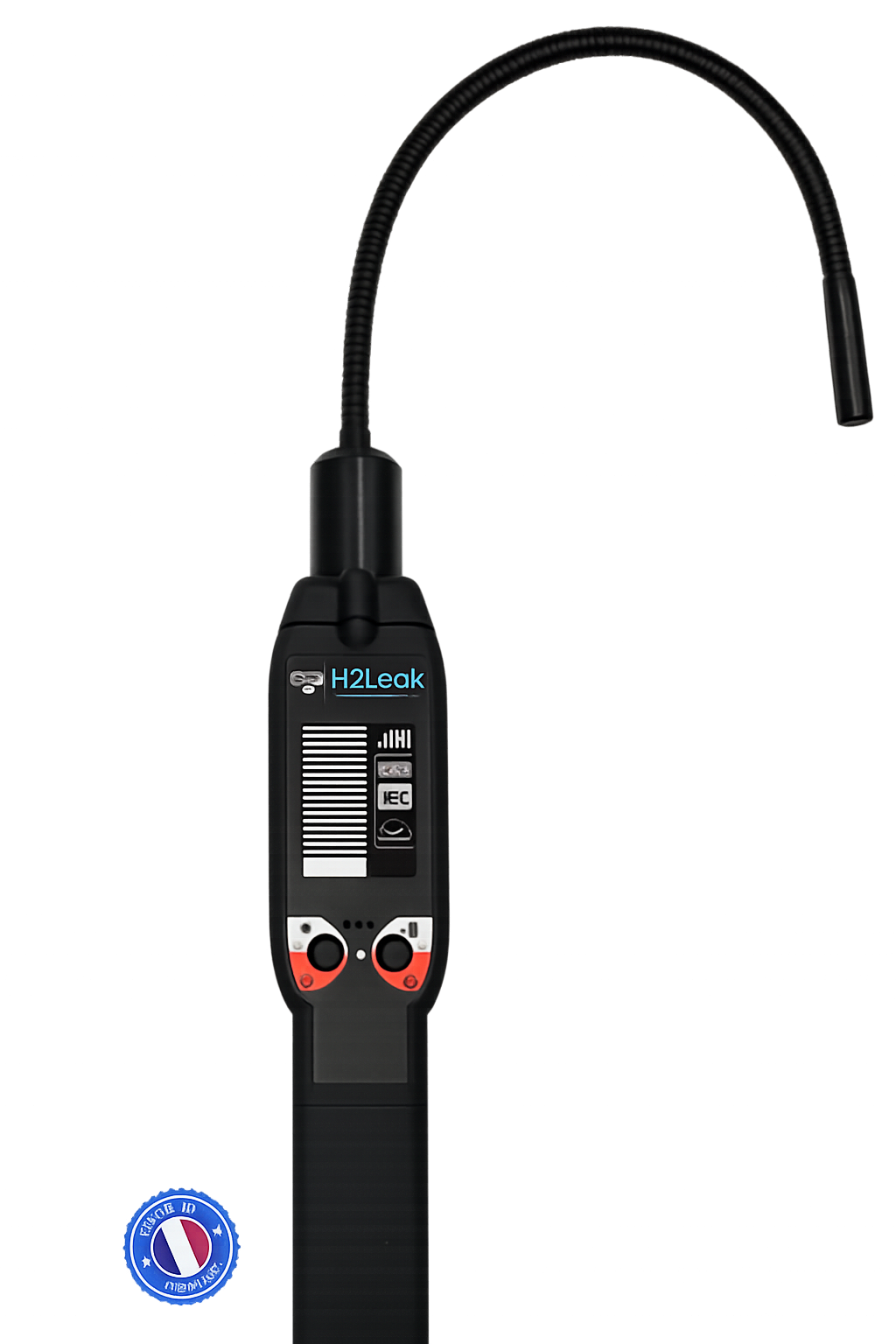
Featured detector: DXR-240 hydrogen + refrigerant leak detector, $1,190 · H2Leak, tracer gas leak detection specialists since 2007
Why Store Refrigeration Needs Hydrogen and Refrigerant Detection
A supermarket can have thousands of brazed joints, hundreds of feet of piping and dozens of cases on one rack. EPA has estimated that a typical store system leaks about a quarter of its charge each year. One detector that works with tracer gas and refrigerant covers every stage, from new store construction to daily service.
New Stores, Remodels & Recovered Circuits
Pressurize new rack piping, case line-ups or a recovered circuit with low-cost H2/N2 forming gas and pinpoint leaks down to 1×10⁻⁵ cc/s (about 1 g/yr refrigerant equivalent) before any refrigerant goes in.
Operating Systems, Store Open
Sniff R-404A, R-448A, R-449A, R-407A, R-134a, R-410A, R-290 self-contained cases and other HFC, HFO and HC refrigerants at 1 g/yr sensitivity during routine leak inspections.
Selective Hydrogen Sensor
Rack rooms and case line-ups are full of background refrigerant. The H2-selective cell ignores it and follows only the tracer gas to the actual leak.
Macro vs. Micro-Leaks: What Nitrogen Tests Miss
Many grocery stores, supermarket chains and their refrigeration contractors still leak-test new and repaired systems with a nitrogen pressure decay test. A nitrogen hold finds big leaks. It routinely misses the small ones that slowly drain refrigerant all year and push a system over the EPA leak rate threshold.
Hydrogen tracer gas leak detection is about 1,000 times more sensitive than nitrogen pressure decay testing, which only reliably finds macro-leaks.
Macro-leaks
A relatively large leak that causes a noticeable pressure drop or rapid loss of gas or refrigerant. Macro-leaks typically:
- Show up as pressure decay during a nitrogen hold
- Can be found with soap bubbles
- May hiss audibly
- Lose significant refrigerant in a short time
Micro-leaks
Very small defects that often pass a pressure test but leak steadily once the system is running. Hydrogen tracer gas finds them:
- Microscopic braze porosity and hairline cracks
- Valve stem seepage and Schrader core leaks
- Threaded fitting leaks
- Case and evaporator connection leaks
| Aspect | Macro-leak | Micro-leak |
|---|---|---|
| Size | Large defect | Very small defect |
| Nitrogen pressure test | Easily detected | Often passes |
| Detection method | Nitrogen hold, soap bubbles | High-sensitivity H2 tracer gas (DXR-240) |
| Leak rate impact | Immediate loss, multiple oz/yr | Gradual loss, as little as 0.25 oz/yr |
| Compliance risk | Short-term | Long-term: leaks add up until a system crosses its EPA threshold |
Where nitrogen pressure decay testing falls short
- Can’t reliably detect micro-leaks in large-volume systems like supermarket racks.
- Temperature swings during a 24-hour hold mask small pressure drops.
- A static test doesn’t reproduce operating vibration and thermal cycling.
- Tells you a leak exists, but not where it is.
- Small leaks often surface only after startup, when the system is full of refrigerant.
Cut Refrigerant Costs Across Every Store
Refrigerant prices keep climbing as the AIM Act HFC phasedown reduces supply. For a chain, every pound that leaks out of every rack has to be bought again, and every service call to chase a leak that “can’t be found” adds labor, product loss risk and downtime.
Stop charging refrigerant just to find leaks
- Leak-test with 5/95 forming gas, which costs about the same as nitrogen, instead of a refrigerant test charge.
- Charge the system once, after the leak is fixed and verified.
- No refrigerant is vented during troubleshooting.
Find it the first time
- Hydrogen is the smallest molecule. It moves quickly through insulation, case evaporators and long piping runs to reveal pinhole leaks.
- Fewer repeat service calls and recharges on the same rack.
- Less risk of warm cases, lost product and emergency calls.
Illustrative only. Actual savings depend on system size, refrigerant type and current pricing.
Meet the EPA 15-Pound Leak Repair Rule
Since January 1, 2026, the EPA’s Emissions Reduction and Reclamation (ER&R) rule under the AIM Act has applied leak repair requirements to appliances with 15 pounds or more of an HFC refrigerant (or substitute) with a GWP above 53. The previous threshold was 50 pounds. For a typical store that now means rack systems, many walk-in coolers and freezers, remote display case circuits and larger rooftop units, not just the main racks.
| Requirement | What it means for you | How the DXR-240 helps |
|---|---|---|
| Leak rate thresholds | 20% for commercial refrigeration (racks, walk-ins, cases) · 10% for comfort cooling (rooftop units, store HVAC) | Find small leaks early, before a system crosses its threshold |
| Repair within 30 days | Leaks over the threshold must be identified and repaired on a deadline | Pinpoint the leak location fast, even on recovered systems |
| Verification testing | An initial verification test, then a follow-up verification test after repair | Confirm repairs with a tracer gas test before recharging |
| Records and reporting | Store owners must document full charge, leak rates, repairs and tests for each appliance | A documented, repeatable leak detection method across every store in the chain |
Summary for general information only. Refer to 40 CFR Part 84 and EPA guidance for complete requirements and exemptions.
Support GreenChill Goals and Store Certification
The EPA’s GreenChill partnership recognizes food retailers that cut refrigerant emissions beyond federal requirements. EPA has estimated that a typical supermarket system leaks about a quarter of its charge each year, while GreenChill partners average far lower leak rates. GreenChill store certification is based on refrigerant charge and annual leak rate, with Platinum stores held to the lowest emissions.
New stores: leak tightness testing
GreenChill certification for newly built stores requires documented leak tightness testing at installation. Hydrogen tracer gas is ideal for testing new piping and racks before any refrigerant goes in.
Existing stores: lower annual leak rates
Routine leak checks with a sensitive, selective detector help stores reduce emissions year over year, which is the key metric for GreenChill partner goals and certification levels.
Meet Your Sustainability and ESG Commitments
Many common HFC refrigerants have global warming potentials in the thousands. That means one pound released can have the climate impact of more than a ton of CO2. For most grocers, refrigerant leaks are one of the largest sources of direct (Scope 1) greenhouse gas emissions. Finding and fixing leaks is one of the fastest, lowest-cost ways to cut them.
- Less refrigerant released: leak-test with tracer gas instead of refrigerant, and fix leaks sooner.
- A non-toxic, non-flammable tracer gas: 5% hydrogen in nitrogen, readily available from industrial gas suppliers.
- Measurable results: lower store and corporate leak rates you can report in sustainability, ESG and climate scorecards.
- Ready for low-GWP refrigerants: detects HFOs and hydrocarbons such as R-290 self-contained cases as stores transition.
How Tracer Gas Leak Detection Works in a Store
Prepare
Start with new rack piping or case line-ups, or isolate and recover the affected circuit per EPA Section 608 practices.
Pressurize
Fill with 5% H2 / 95% N2 tracer gas.
Locate
Sweep brazed joints, case connections, valves and evaporators. The graphic ramp and rising tone lead you to the leak.
Repair & Verify
Repair, then re-test with tracer gas to confirm the system is tight.
Charge & Document
Evacuate, charge once and record the test. Use refrigerant mode for routine inspections afterward.
Featured Detector: DXR-240 Specifications
| Detected gases | HFC, HFO, HC (incl. R-290, R-600a) refrigerants; H2/N2 tracer gas |
| Sensitivity | HFC/HFO: 1 g/yr · H2/N2: 1×10⁻⁵ cc/s (≈1 g/yr refrigerant equivalent) |
| Sensor | Electrochemical, two interchangeable detection cells (universal refrigerant and H2/N2, or H2/N2-selective) |
| Replacement cells | $190 each · typical life about 2 years · field-swappable, no factory return |
| Sensitivity settings | 3 positions: HI / MED / LOW, plus gas family selector |
| Response / warm-up | About 1 second / about 60 seconds |
| Display & alarm | OLED graphic ramp, progressive audible signal, contamination and battery indication, work light |
| Probe | 30 cm flexible shape-memory probe with suction flow |
| Battery | About 8 hours; USB-C recharge |
| Weight | 0.35 kg (12 oz) |
| Included | Transport case, mains charger, user manual |
| Price | $1,190 |
Not explosion-proof. Do not use in hazardous or explosive atmospheres.
Where Leaks Hide in Grocery, Supermarket and Big Box Stores
Rack Systems & Machine Rooms
Compressor racks, headers, valves and long piping runs to the sales floor, where most of the store’s refrigerant charge lives.
Display Cases & Walk-Ins
Case evaporators, line-up connections, walk-in coolers and freezers, where micro-leaks at joints and Schrader cores add up.
Big Box Rooftop Units & HVAC
Rooftop units and comfort cooling over large sales floors, held to the EPA’s tighter 10% leak rate threshold.
New Store Construction & Remodels
Tracer gas leak tightness testing before the first charge supports GreenChill certification and prevents leaks on day one.
Distribution Centers & Cold Storage
Large refrigerated warehouses supplying the stores, where big charges make every pound of leakage expensive.
Frequently Asked Questions
How do supermarkets find refrigerant leaks that nitrogen pressure tests miss?
A nitrogen pressure decay test reliably finds only macro-leaks. Micro-leaks in rack piping, case connections, Schrader cores and valve stems often pass a nitrogen hold but leak steadily once the system runs. Hydrogen tracer gas (5% hydrogen, 95% nitrogen) is about 1,000 times more sensitive and pinpoints each leak so it can be repaired before the system is charged.
Which grocery store systems fall under the EPA 15 lb leak repair rule?
Since January 1, 2026, EPA leak repair requirements apply to appliances with 15 lb or more of an HFC refrigerant with a GWP above 53. In a typical store that includes rack systems, many walk-in coolers and freezers, remote display case circuits and larger rooftop units. Commercial refrigeration has a 20% leak rate threshold and comfort cooling has a 10% threshold.
Can we leak check refrigeration while the store is open?
Yes. On operating, charged systems the DXR-240 runs in refrigerant mode to sniff HFC, HFO and HC refrigerants at 1 g/yr sensitivity. Tracer gas mode is used on new installs, remodels and circuits that have been recovered for repair.
Does hydrogen tracer gas help with GreenChill store certification?
GreenChill certification for newly built stores requires documented leak tightness testing at installation, and existing stores are evaluated on annual leak rate. Tracer gas testing finds micro-leaks before the first charge and supports lower leak rates over time.
Is 5% hydrogen / 95% nitrogen tracer gas safe to use in a store?
Yes. The 5/95 forming gas mixture is non-flammable and non-toxic, and it is readily available from welding and industrial gas suppliers.
How much do replacement sensors cost?
Replacement detection cells for the DXR-240 are $190 with a typical life of about 2 years. Cells are field-swappable, so there is no need to send the detector back to the factory.
Lower Leak Rates in Every Store
Talk with H2Leak about hydrogen tracer gas leak detection for your stores, your refrigeration contractor or your in-house service team.
Request a QuoteH2Leak · 233 Arnold Mill Road, Suite 300, Woodstock, GA 30188 · (770) 479-7138