
HYDRO-LOK™ HYDROGEN TRACER GAS SYSTEM
The underground water pipe leak detector built to stop blind excavation
Locate hidden leaks in buried water lines, irrigation systems, and industrial piping — without costly, guesswork digging.
Hydro-Lok is a hydrogen leak detector underground pipe crews trust on the truck — using a safe 5% hydrogen / 95% nitrogen tracer gas to pinpoint leaks that acoustic equipment misses: plastic pipe, deep burial, low pressure, and dense or noisy soil conditions. Industry-leading sensitivity, at the lowest cost per unit on the market.
THE UNIT
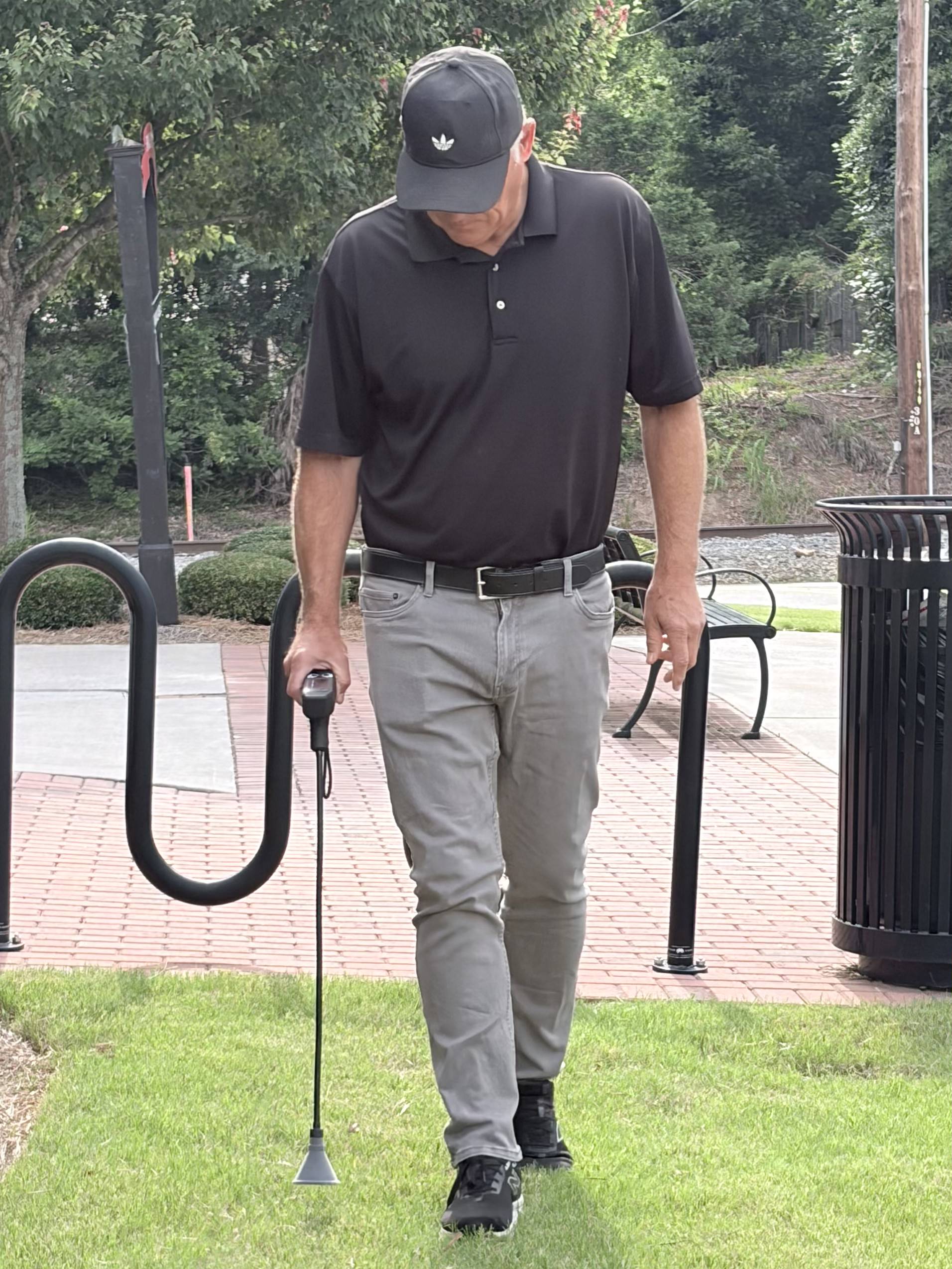
What Hydro-Lok looks like on the truck

01 / WHY HYDROGEN
Why hydrogen tracer gas outperforms guesswork
Acoustic leak detection is the industry default, but it has known blind spots. A hydrogen leak detector underground pipe teams can rely on closes those gaps.
Lightest, highest-energy gas available
Rises quickly through soil, gravel, pavement, and even concrete — reaching the surface directly above, or very near, the leak.
Non-toxic, safe for potable water
The 5% hydrogen / 95% nitrogen blend is non-flammable and carries no contamination risk on drinking water lines.
Detectable at the ppm level
Hydro-Lok senses hydrogen down to parts-per-million, catching micro-leaks and intermittent leaks that acoustic tools miss.
Low cost, job after job
Hydrogen and nitrogen are both abundant, so tracer gas costs far less per job than helium-based alternatives.
02 / VS. ACOUSTIC
Where Hydro-Lok wins, and where acoustic still earns its keep
Acoustic equipment is fast on accessible metal lines. Hydrogen tracer gas succeeds in exactly the conditions where acoustic falls short — many companies run both.
| Condition | Acoustic leak detection | Hydro-Lok hydrogen tracer gas |
|---|---|---|
| Plastic pipe (PVC, HDPE, PEX) | Poor sound transmission | Unaffected — detects gas, not sound |
| Deep burial | Signal degrades with depth | Detects at any depth (longer wait time) |
| Background / traffic noise | Interferes with listening | Unaffected by ambient noise |
| Low water pressure | Little to no leak noise generated | Unaffected — gas is pressurized separately |
| Very small or intermittent leaks | Frequently missed | Detects down to the ppm level |
| Saturated or dense soil | Sound dampened | Slower migration, still detectable |
| Pre-excavation verification | Confirms general area | Pinpoints exact spot |
03 / VS. HELIUM
Why hydrogen tracer gas beats helium
Helium is the other common tracer gas for leak detection. It works — but it costs more to run and the equipment built around it carries a risk hydrogen-based tools don’t.
| Factor | Helium tracer gas | Hydro-Lok H₂/N₂ tracer gas |
|---|---|---|
| Gas cost | 4–5x the price of H₂/N₂ tracer mixture | Low cost — hydrogen and nitrogen are both abundant |
| Detection method | Thermal conductivity, typically pump-driven suction | Micro-turbine suction — no pump |
| Contaminant risk | Pump can draw dust, moisture, and debris into the pump and sensor | Suction is too weak to pull in anything but the H₂/N₂ gas itself |
| Sensor exposure | Sensor sits downstream of the pump path | Detection cell protected from particulate ingestion |
| Migration speed through soil | Slower — heavier molecule | Faster — hydrogen is the lightest gas available |
See the full comparison of leak detection tracer gases and technologies →
04 / PROCESS
How Hydro-Lok works in the field
A straightforward, repeatable process for locating buried leaks.
Pressurize the line
Introduce the 5% hydrogen / 95% nitrogen tracer gas at a safe pressure that won’t damage the pipe. Injection pressure directly affects how fast gas escapes at the leak.
Gas escapes at the leak point
The tracer mixture rises straight up through dirt, gravel, asphalt, or concrete toward the surface.
Wait for surface migration
Travel time depends mainly on burial depth and the density of the material above the pipe — see the migration-time table below.
Walk the pipe route
Slowly sweep the Hydro-Lok probe near the ground along the pipe’s path until you get an audible or on-screen signal.
Narrow with sensitivity settings
Start on the highest of 3 sensitivity levels to broad-search, then drop sensitivity to pinpoint the exact leak location.
Verify before you dig
Under slabs or concrete, drill small pilot holes to confirm the precise spot before full excavation.
05 / TIMING
How long it takes tracer gas to reach the surface
The most common question from technicians new to hydrogen tracer gas. Migration time depends mainly on pipe depth and the density of the covering material.
| Covering material | Depth / thickness | Estimated wait time |
|---|---|---|
| Dry sand | 1 m (~3.3 ft) | 20 minutes |
| Loose / dry soil | 2 ft | A few minutes to 30 minutes |
| Wet sand / dry soil | 1 m (~3.3 ft) | ~1 hour |
| Dry clay / wet soil | 1 m (~3.3 ft) | ~4 hours |
| Wet clay | 1 m (~3.3 ft) | ~12 hours |
| Asphalt | 5 cm (~2 in) | Up to several hours |
| Concrete | 20 cm (~8 in) | Several hours |
| Any material | 8 ft deep | Overnight (recommended) |
Field tip — set sensitivity to maximum to locate the general area, then lower it to zero in on the exact point, probing roughly every foot along the pipe route.
Depth matters most
A 2-foot-deep pipe may surface in 30 minutes; an 8-foot line may need to run overnight.
Hydrogen’s advantage
The smallest, lightest molecule available moves through soil, asphalt, and concrete faster than helium.
Cracks and joints
Let gas escape faster than intact material — but the surface point may be slightly offset from the true leak.
Soil moisture
Reduces lateral spread but can raise concentration near the leak; wet clay is the slowest to penetrate.
06 / EQUIPMENT
Built for daily use on the job site
Every feature is aimed at professional leak locators who need precision in the field, every day.
Ultra-sensitive detection
Senses hydrogen down to the ppm level, catching leaks other methods miss.
Safe, non-flammable tracer
5% hydrogen / 95% nitrogen — non-combustible and safe for pressurized lines.
Succeeds where acoustic fails
Purpose-built for buried, plastic, or low-pressure lines.
Second-check verification
Confirm a leak location found by another method before excavating.
Fast response time
Under 1 second, for efficient, methodical ground walking.
Bright digital LCD
High-contrast display, readable in direct sunlight and low light.
Rugged, field-ready build
Constructed to hold up to daily use on job sites.
Field-replaceable parts
Swappable H2 sensor and probe keep the unit running with minimal downtime.
07 / APPLICATIONS
Where this equipment gets used
As a hydrogen leak detector underground pipe teams use across residential, commercial, municipal, and industrial water systems, Hydro-Lok works on pipe materials that trip up sound-based methods — PVC, HDPE, PEX, copper, galvanized steel, ductile iron, and cast iron.
Residential water services
- Main water service lines
- Yard water leaks
- Slab leaks
- Irrigation systems
- Pool plumbing
Commercial facilities
- Office buildings
- Shopping centers
- Apartment complexes
- Hotels
- Schools & hospitals
Municipal water systems
- Water distribution mains
- Service connections
- Transmission pipelines
- Valve installations
- New main pressure testing
Industrial facilities
- Process water piping
- Cooling water systems
- Underground utility piping
- Manufacturing facilities
08 / DATA SHEET
Technical specifications
| Brand | H2Leak |
|---|---|
| Tracer gas | 5% Hydrogen / 95% Nitrogen |
| Detection sensitivity | 1 × 10⁻⁵ cc/s (H₂/N₂) |
| Response time | < 1 second |
| Display / signal | Progressive ramp with sound signal tied to leak rate |
| Probe | Flexible sniffer probe |
| Screen | High-contrast digital LCD |
| Power | USB-C charging, 12-hour battery life |
| Operating temperature | 10°C to +50°C |
| Dimensions | H 55 cm × W 5 cm × D 4 cm |
| Weight | 0.350 kg |
WHAT’S INCLUDED
- Hydro-Lok™ leak detector unit
- Flexible sniffer probe
- USB-C charging cable
- Field carrying case
- Product manual
09 / FAQ
Frequently asked questions
Is hydrogen tracer gas safe to use on drinking water lines?
Can Hydro-Lok find leaks in plastic pipe?
How deep can Hydro-Lok detect a leak?
Do I still need acoustic equipment if I have a hydrogen tracer gas detector?
How much does it cost to run a job with hydrogen tracer gas?
What pipe materials does Hydro-Lok work on?
10 / FOR BUYERS
What plumbing and leak detection companies ask before adding this equipment
Every leak pinpointed accurately instead of estimated saves labor, restoration cost (landscaping, concrete, asphalt patching), and callback risk from a missed first dig.
Offering leak location as a standalone or add-on service opens work beyond routine repair calls — see how plumbing companies are building this into their offering.
Verifying a leak location before scheduling excavation crews reduces wasted site visits.
Ask about onboarding, phone or video support, and how quickly a new operator can get comfortable in the field.
The sensor and probe are field-replaceable — ask about warranty terms and how to order replacement parts.
Hydrogen moves faster through soil and asphalt than helium, and costs less per job — worth asking for a side-by-side if you’re evaluating tracer gases.

See the return on investment for plumbing companies
How plumbing companies can expand their operations and revenue with a small investment in hydrogen tracer gas leak detection.
Read the Plumbing Company ROI breakdown →READY TO STOP EXCAVATING BLIND
Talk to H2Leak about adding Hydro-Lok to your toolkit
Get pricing, a product sheet, or ask a technical question about a specific job.