
VRF Leak Detection & Refrigerant Leak Locating
Fast, Accurate Leak Testing for VRF HVAC Systems
Ideal For:
- VRF HVAC contractors
- Mechanical contractors
- Commercial refrigeration installers
- Design-build HVAC firms
- Commissioning agents
- Facility maintenance teams
⚠️ Common VRF Leak Points
- Flare fittings (especially improperly torqued)
- Brazed joints
- Branch selector (BS) boxes
- Service valves
- Schrader cores
- Factory joints (rare but possible)
Fast, Accurate Leak Testing for VRF HVAC Systems
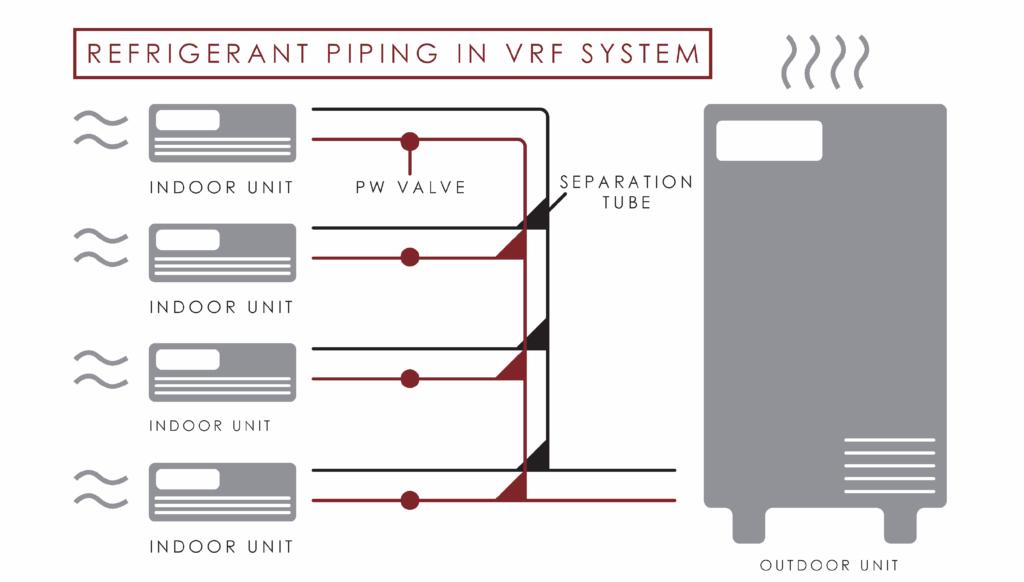
Leak checking a VRF (Variable Refrigerant Flow) air conditioning system requires more precision than standard split systems because of the long piping runs, multiple branch connections, and large refrigerant charges. Even the smallest refrigerant leak can reduce system performance, damage compressors, and lead to costly refrigerant loss across multiple zones.
🔧 Why VRF Leak Detection Is Critical
- VRF systems often have hundreds of joints and connections
- Even a small leak can cause:
- Capacity loss across multiple zones
- Compressor damage
- Expensive refrigerant replacement
- Many systems use R-410A or R-32, which require tight leak tolerances
🧪 Difficulty of Leak Checking VRF Air Conditioning Systems
- VRF systems often hare behind sheetrock walls
- Nitrogen Pressure Decay leak testing is not sensitive enough to find crippling to the system smaller leaks
- Many systems use R-410A or R-32, which require tight leak tolerances
💡 Why Hydrogen Leak Detection is Best for VRF Air Conditioning Systems
- Use 95% Nitrogen / 5% Hydrogen mix
- Detect leaks with a hydrogen sniffer
- Advantages:
- Detects extremely small leaks down to 1 gram/yr of refrigerant gas
- Works on long VRF piping runs
- Non-toxic and safe
- Can work effectively behind sheetrock walls as the hydrogen can pass through sheetrock
- Detect extremely small leaks that cannot be seen or heard
- Trace leaks through insulation and wall cavities
- Locate leaks in buried or inaccessible piping
👉 This is the most effective method for VRF systems, especially large commercial installs and long piping runs.