
Supermarket & Grocery Refrigeration
Supermarket Refrigeration Leak Detection That Finds the Leak, Not Just the Alarm
Pinpoint refrigerant leaks in rack systems, walk-in coolers and display cases with hydrogen tracer gas. Cut refrigerant loss, reduce top-off costs and meet EPA AIM Act leak repair deadlines with verified repairs.
From ALD alarm to verified repair
Your ALD system tells you refrigerant is escaping. It doesn’t tell you where.
Fixed refrigerant gas monitors and automatic leak detection are essential, but a machine-room alarm still leaves technicians hunting through hundreds of feet of piping, case coils and evaporators. Every hour spent searching means more refrigerant loss, more product at risk and less time on the EPA leak repair clock.
Refrigerant leak cost
Repeated refrigerant top-offs add up fast, and HFC supply is tightening under the AIM Act phasedown. Reduce refrigerant loss at the source.
Product loss and shrink
Slow leaks show up as case temperature alarms and spoiled inventory. Finding leaks early protects product and prevents refrigeration failures.
Compliance exposure
Leak rate thresholds, repair timelines, chronic leaker reports and recordkeeping now apply to most supermarket systems.
Scope 1 emissions
Refrigerant emissions are often a retailer’s largest Scope 1 source. Fewer leaks support HFC emissions reduction and ESG goals.
Regulatory update
EPA AIM Act leak repair rules for supermarket refrigeration
The EPA Emissions Reduction and Reclamation (ER&R) rule under 40 CFR Part 84 took effect January 1, 2026. It expands leak repair, automatic leak detection and reclaimed refrigerant requirements for grocery and supermarket systems.
Requirements and deadlines may change as EPA updates the program. Confirm current rules with EPA before making compliance decisions.
Hydrogen tracer gas leak detection
How to pinpoint a refrigerant leak with hydrogen tracer gas
Hydrogen is the smallest, lightest molecule, so it escapes through leaks that refrigerant detectors and soap bubbles miss. Using standard forming gas (5% hydrogen, 95% nitrogen), technicians can find hard-to-find leaks quickly, without venting refrigerant.
01
Isolate and recover
Isolate the suspect circuit or case line and recover refrigerant per standard practice.
02
Pressurize with forming gas
Charge with non-flammable 5% H₂ / 95% N₂ forming gas, the same gas used for nitrogen pressure testing, now traceable.
03
Sniff and pinpoint
Trace piping, brazed joints, valves and coils with a DXR-240 hydrogen leak detector to locate the exact leak point.
04
Repair and verify
Fix the leak and re-test before recharging: a clean leak repair verification test for your records.
Tracer gas vs. other refrigerant leak detection methods
Fixed vs. portable leak detection, nitrogen pressure test vs. tracer gas, ultrasonic or UV dye: each has a role. Here is where hydrogen tracer gas fits.
| Method | Tells you a leak exists | Pinpoints location | Works without refrigerant |
|---|---|---|---|
| Hydrogen tracer gas (H2Leak DXR-240) | Yes | Yes, very small leaks | Yes |
| Automatic leak detection / fixed gas monitors | Yes, continuous | Zone only | No |
| Nitrogen pressure test (standing pressure) | Yes | No | Yes |
| Electronic refrigerant leak detector | Yes | Moderate | No |
| Ultrasonic leak detection | Larger leaks | Moderate, noise-sensitive | Yes |
| UV dye leak detection | After dye circulates | Visible areas only | No |
Featured detector
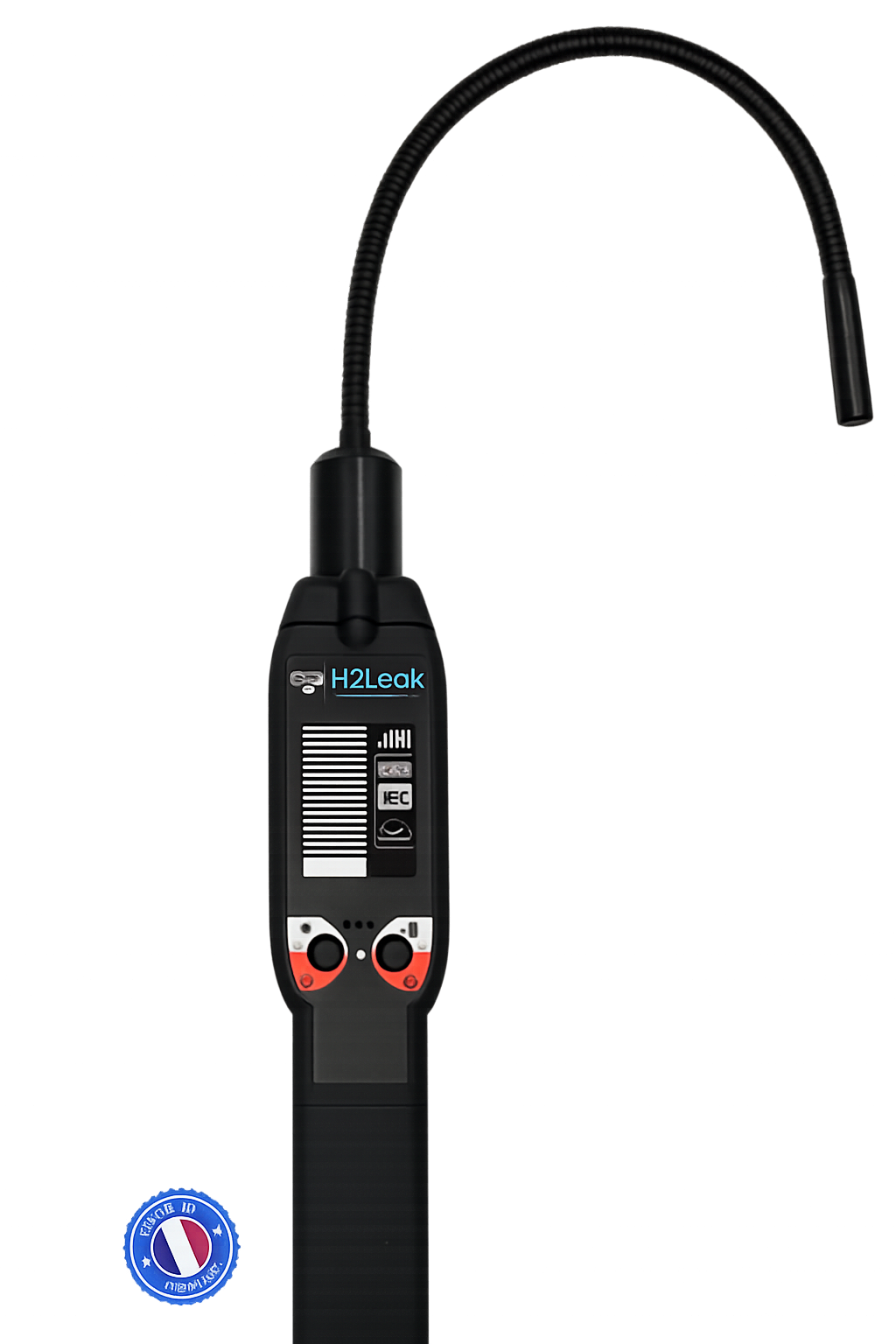
H2Leak DXR-240 Hydrogen & Refrigerant Leak Detector
Two leak detectors in one handheld unit. Hunt refrigerant leaks on a charged system, or switch to hydrogen tracer gas on an evacuated or new system. One tool covers ALD alarm follow-up, leak repair verification and new store commissioning.
Leak detection for every grocery refrigeration system
From legacy HFC racks to natural refrigerant and low-GWP systems, tracer gas testing works on the piping, not the refrigerant.
Rack system leak detection
Centralized parallel racks, headers and long liquid and suction runs.
Distributed systems
Rooftop and in-store distributed units with shorter, more numerous circuits.
Walk-in cooler and freezer leaks
Evaporator coils, expansion valves and defrost-stressed joints.
Display case leaks
Multi-deck, reach-in and island cases where coils are hard to reach.
CO2 transcritical (R-744)
Leak test high-pressure CO2 systems during commissioning and service.
A2L refrigerants
R-454C, R-455A and other low-GWP retrofits and new installs.
R-290 self-contained cases
Low-charge propane cases where every gram of charge counts.
Distribution centers and cold storage
Large-charge DC refrigeration and warehouse systems.
Remodels and new store builds
Leak test new piping with forming gas before refrigerant is ever charged. Catch installation leaks on day one instead of after opening.
Built for the people who own refrigerant performance
Directors of refrigeration
Lower your chain-wide supermarket refrigerant leak rate and standardize your refrigeration maintenance program.
Facilities managers
Shorten service calls, cut repeat visits and keep stores compliant with EPA leak repair timelines.
Energy and sustainability
Strengthen your refrigerant management plan and report real Scope 1 reductions.
Refrigeration contractors
Give your techs a faster way to find hard-to-find leaks across your grocery accounts.
Supermarket leak detection FAQ
How do I find a refrigerant leak after an ALD alarm?
An automatic leak detection alarm narrows the problem to a zone or system. Isolate the suspect circuit, pressurize with forming gas, and use a hydrogen leak detector to pinpoint the exact joint or component.
Is 5% hydrogen forming gas safe to use in a store?
Standard forming gas (5% H₂ / 95% N₂) is non-flammable and widely used for leak testing. Follow normal pressure-testing safety practices and the system manufacturer’s test pressure limits.
What leak rate triggers repair for commercial refrigeration?
Under the EPA ER&R rule, commercial refrigeration appliances with 15 lb or more of HFC refrigerant must be repaired when the annual leak rate exceeds 20%. Check EPA for the current requirements.
Does tracer gas work on CO2 and A2L systems?
Yes. Tracer gas testing checks the integrity of the piping and components, so it applies to HFC, CO2 transcritical, A2L and propane systems alike.
How is this different from a nitrogen pressure test?
A standing nitrogen pressure test tells you whether a system leaks. Adding hydrogen tracer gas lets you find exactly where it leaks, with the same test setup.
Reduce refrigerant loss across your stores
H2Leak supplies hydrogen and refrigerant leak detection equipment to service teams across the USA. Contact us for pricing, multi-store quotes and help choosing the right leak detection setup for your refrigeration team.
Phone: [YOUR PHONE] · Email: [YOUR EMAIL]