
Find Underground Pool Leaks Without Tearing Up the Deck
Hydrogen tracer gas pinpoints leaks in pool return, suction, skimmer and main drain lines buried under concrete, pavers and soil. Dig one hole in the right spot instead of breaking out the deck looking for it.
Used by pool leak detection companies nationwide · H2Leak, hydrogen tracer gas specialists since 2007
Pressure Tests Tell You Which Line Leaks. Hydrogen Tells You Where.
A dye test or line pressure test can confirm that a return or suction line is leaking. The hard part is finding the exact spot under 20 or 40 feet of concrete deck. Guess wrong and you’re cutting, digging and patching for nothing.
Why pool leaks are hard to locate
- Pool plumbing is PVC, which carries leak noise poorly for listening equipment.
- Pumps, heaters, traffic and wind drown out the faint sound of a small leak.
- Lines run under decks, pavers and landscaping with no record of the route.
- Small leaks lose water slowly and leave no wet spot at the surface.
Why hydrogen tracer gas works
- Hydrogen is the smallest, lightest molecule. It rises straight up from the leak through soil, concrete and pavers.
- Works on PVC, flex PVC and any other pipe material.
- Unaffected by background noise.
- Finds small and intermittent leaks that listening misses.
How Hydrogen Tracer Gas Pool Leak Detection Works
Confirm
Use a dye test or line pressure test to identify which line is leaking.
Isolate
Plug the line at the pool fitting and the equipment pad. Blow out water if needed.
Fill
Introduce 5% H2 / 95% N2 tracer gas at a safe pressure for the line, then give it time to percolate.
Sniff
Walk the line route with the cone tip. Check joints, cracks and coping. Switch to the pinpoint tip and lower sensitivity to narrow it down.
Dig & Verify
Open one spot, repair, then re-test the line to confirm it’s tight.
Pool and Spa Leaks Hydrogen Can Locate
Return & Suction Lines
The most common source of underground pool water loss, often running the full length of the deck to the equipment pad.
Skimmer & Main Drain Lines
Cracked skimmer throats, failed glue joints and main drain lines under the pool floor and deck.
Spas & Water Features
Spa jet lines, spillways, waterfalls and fountains with tightly packed plumbing that’s hard to listen to.
Autofill & Water Service
Pressurized fill lines and the water supply to the pool, where hidden leaks show up as a high water bill.
Commercial Pools
Hotels, HOAs, water parks and municipal pools with long buried runs and costly closures.
Under Decks & Pavers
Concrete, stamped concrete, travertine and pavers, without removing the whole surface to search.
How Long Does It Take the Gas to Surface?
Time depends on depth and what the gas has to pass through. Typical times:
| Material above the line | Depth | Typical time to surface |
|---|---|---|
| Loose soil / landscaping | 2 ft | Minutes to 30 minutes |
| Dry sand | 3 ft (1 m) | About 20 minutes |
| Wet clay | 3 ft (1 m) | Up to 12 hours |
| Solid concrete deck | 8 in (20 cm) | Several hours |
Why Pool Leak Detection Companies Add Hydrogen
- Find the leaks your competitors can’t. Take the jobs other companies walked away from or charged for without finding the leak.
- One hole, not a trench. Customers pay for a precise location, not a torn-up deck.
- Confirm acoustic findings. Use hydrogen to verify a location before anyone breaks concrete.
- Fewer return trips. Locate and verify on the first visit.
- Low cost per job. 5/95 tracer gas is inexpensive and available from local gas suppliers.
- Simple to learn. A graduated display and rising tone lead the tech to the strongest signal.
From Our Pool Leak Detection Customers
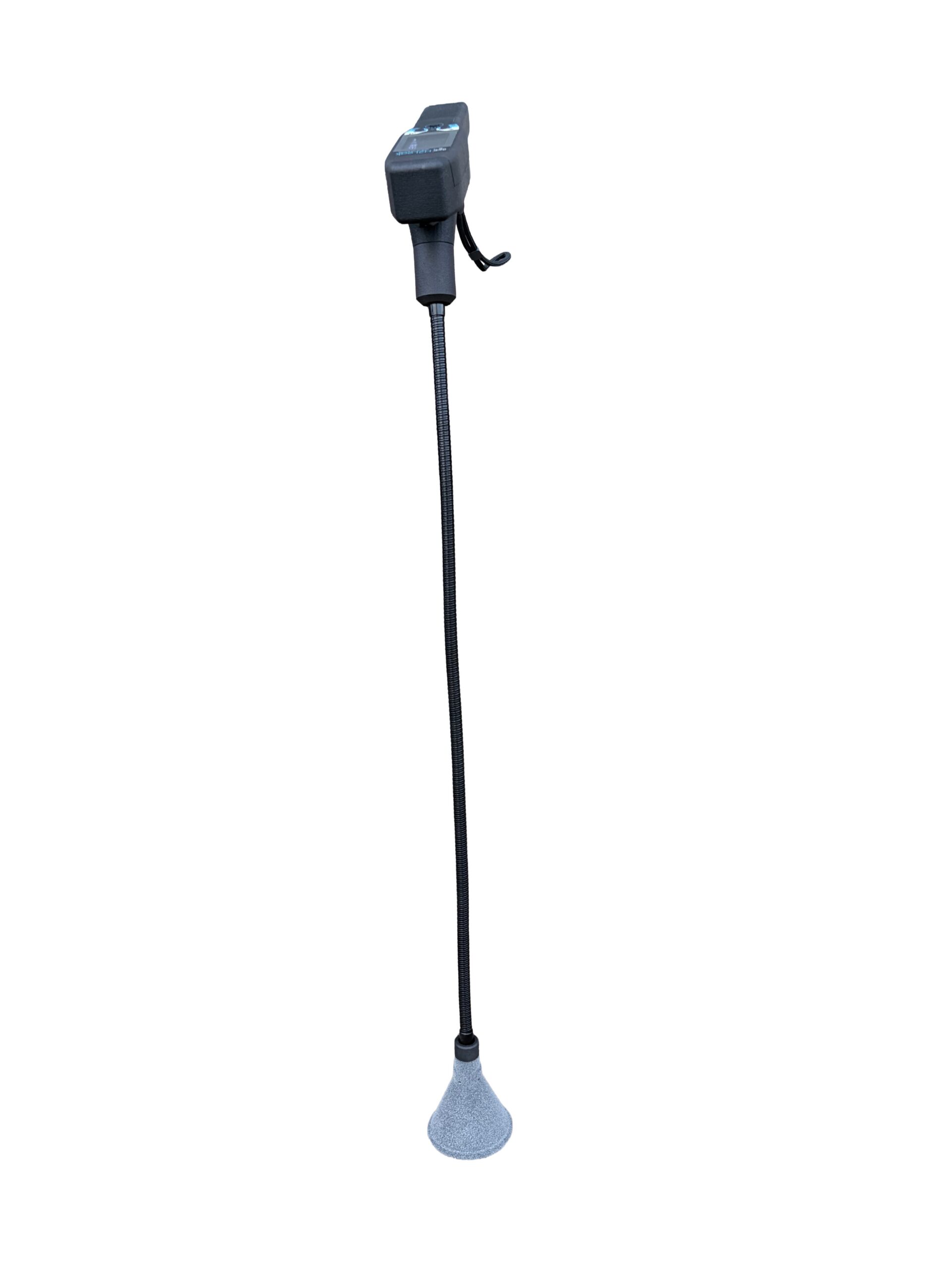
Recommended Detector: Hydro-Lok™
The Hydro-Lok is our compact underground hydrogen leak detector, built for walking pipe routes and reading through soil, concrete and pavers.
| Tracer gas | 5% hydrogen / 95% nitrogen (non-flammable) |
| Sensitivity | 1×10⁻⁵ cc/s (H2/N2) |
| Response time | Under 1 second |
| Sensitivity levels | 3 levels: broad search, then pinpoint |
| Tips | Cone tip for reading through the surface; pinpoint tip for joints, cracks and pilot holes |
| Hose & sensor | Field-replaceable flex hose and hydrogen sensor |
| Power | USB-C rechargeable |
| Weight | 0.35 kg (12 oz) |
| Included | Detector, sniffer probe, USB-C cable, field carrying case, manual |
| Warranty | 12 months |
Need to check equipment pad fittings, heaters and above-ground plumbing too? Ask about the handheld DXH-240.
Frequently Asked Questions
How does hydrogen tracer gas find a pool leak?
The suspect pool line is isolated and filled with a safe mix of 5% hydrogen and 95% nitrogen. The gas escapes at the leak and rises through soil, concrete and pavers to the surface, where a hydrogen leak detector picks it up. The strongest reading marks the leak location, so you dig or cut in one spot.
Why not just use acoustic listening equipment?
Pool plumbing is almost all PVC, which carries leak noise poorly, and pool equipment, pumps and traffic add background noise. Hydrogen tracer gas doesn’t depend on sound, so it works on plastic pipe and in noisy environments. Many pool leak specialists use both methods to confirm a location.
Can hydrogen be detected through a concrete pool deck?
Yes. Hydrogen is the smallest and lightest molecule and moves through concrete, pavers and soil. Through solid concrete it can take a few hours to surface; checking expansion joints, cracks, coping and small pilot holes speeds up location.
Is 5% hydrogen / 95% nitrogen safe around pools and homes?
Yes. The 5/95 mixture is non-flammable and non-toxic, safe for potable water piping, and readily available from welding and industrial gas suppliers.
Which pool lines can be tested?
Return lines, suction lines, skimmer lines, main drain lines, spa and water feature lines, autofill lines and the water service to the equipment pad. Any line that can be isolated and pressurized can be traced.
Stop Guessing Where the Pool Leak Is
Talk with H2Leak about the Hydro-Lok, tracer gas setup and fittings for pool lines, and getting your crew trained.
Request a QuoteH2Leak · 233 Arnold Mill Road, Suite 300, Woodstock, GA 30188 · (770) 479-7138