
Stop paying helium prices to find leaks.
Hydrogen tracer gas finds the same leaks as helium, with sniffer sensitivity to match, at a fraction of the gas cost. For most shops, switching pays for itself in about four tanks of helium.
Calculate your savings See the detectorsWhy switch to hydrogen?
Helium has been the default tracer gas for decades. But its price and supply have become a real cost problem for service companies, and hydrogen does the same job.
Dramatically lower gas cost
A cylinder of helium tracer gas runs around $450. A cylinder of 5% hydrogen / 95% nitrogen runs around $85. That’s $365 saved on every cylinder you replace.
Fast payback
The equipment change is low-cost. The tracer gas savings typically cover it after roughly four helium tanks. After that, every test is cheaper.
Behaves like helium
Hydrogen is the lightest molecule there is. Like helium, it’s small, fast-moving and flows readily through tiny leak paths, so your leak-hunting technique stays the same.
Lower background noise
Natural hydrogen in air is about 0.5 ppm, roughly one-tenth of helium’s ~5 ppm. Lower background means cleaner readings and fewer false signals.
Clears the area quickly
Hydrogen disperses and vents fast, so the work area doesn’t saturate the way it can with helium indoors. Less waiting between tests, more pinpoint accuracy.
Safe, standard gas mix
Tracer gas is 5% hydrogen / 95% nitrogen, a non-toxic, non-flammable mixture commonly sold as “forming gas.” Technicians already pressure-test with nitrogen, so the workflow barely changes.
Helium isn’t just expensive this year. It’s being rationed.
In March 2026, damage to Qatar’s Ras Laffan gas facility took roughly a third of the world’s helium supply offline. U.S. suppliers moved quickly to protect what they had left.
When helium is on allocation, a leak-detection job can stall because your supplier won’t fill the cylinder. Hydrogen/nitrogen tracer gas comes from a completely different supply chain, so your techs keep working no matter what happens to helium.
Helium vs. hydrogen, side by side
The downsides of switching are minimal. Here’s how the two tracer gases compare in real service work.
| Factor | Helium tracer gas | Hydrogen tracer gas (5% H₂ / 95% N₂) |
|---|---|---|
| Gas cost | About $450 per cylinder; volatile and subject to shortages | About $85 per cylinder; widely available from local suppliers |
| Background in air | ~5 ppm | ~0.5 ppm, about 10× lower |
| Sniffer sensitivity | 1×10⁻⁵ cc/s (TG-240D) | 1×10⁻⁵ cc/s for 5% H₂/N₂ (DXH-240), a match for helium |
| Leak behavior | Small, light molecule; flows through tiny leaks | Even lighter molecule; behaves similarly |
| Area contamination | Can accumulate indoors and raise background | Disperses quickly |
| Detector cost | Higher | Low cost to change equipment |
| Safety | Inert | Non-toxic and non-flammable at 5% in nitrogen |
| Supply outlook | On allocation in 2026; some customers limited to 50% of normal volumes | Readily available from local gas suppliers |
Hydrogen leak detectors from H2Leak
Every detector has 3 sensitivity levels, a graduated display with a rising alert tone as you close in, and automatic zero on ambient air. Pick the one that matches the job.
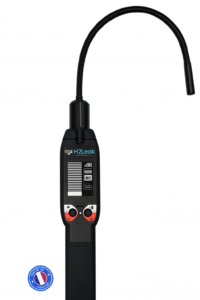
DXH-240
A dedicated hydrogen sniffer for HVAC, refrigeration and automotive work. Our most sensitive handheld, built for use with 5% H₂ / 95% N₂ tracer gas.
- Graduated display and rising alert tone
- Automatic zero on ambient air
- Protective storage case
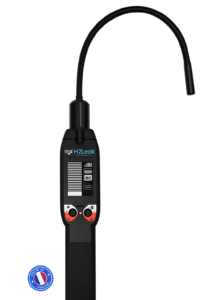
DXR-240
Two detectors in one. When the system still holds refrigerant, sniff for refrigerant. When it needs a tracer gas, switch to H₂/N₂. One tool covers every service call.
- Graduated display and rising alert tone
- Automatic zero on ambient air
- Protective storage case
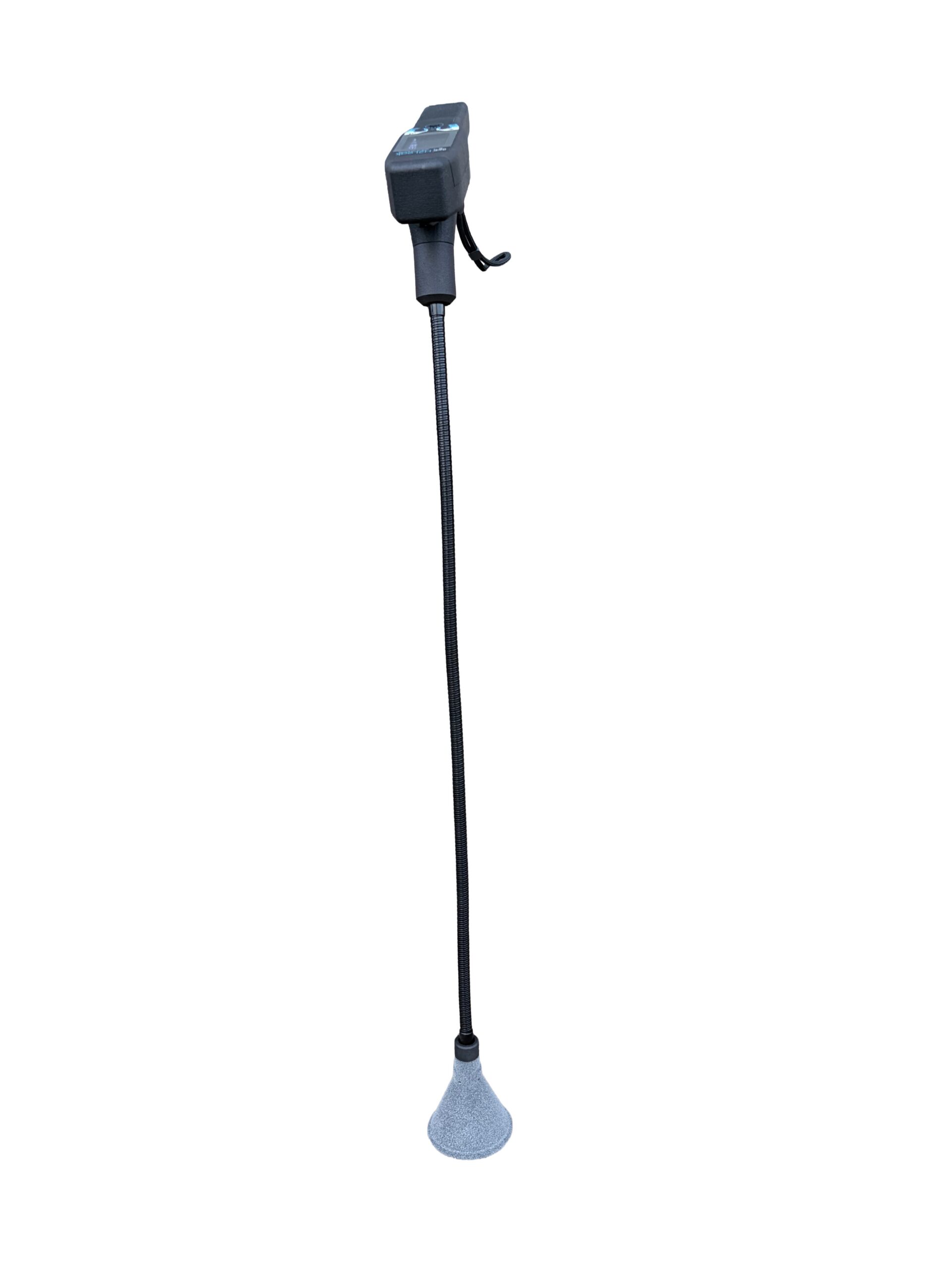
Hydro-Lok™
Built for buried water, gas and pool lines. Hydrogen tracer gas rises straight up through soil, asphalt and concrete, so you can pinpoint the leak before you dig.
- Finds leaks acoustic methods miss, even at low line pressure
- Graduated display and rising alert tone
- Compact protective storage case
Have to stay with helium?
Some customer specifications, labs and manufacturing processes still call for helium. For those jobs, H2Leak carries a portable helium detector, and it reads hydrogen too, so you’re ready when you make the switch.
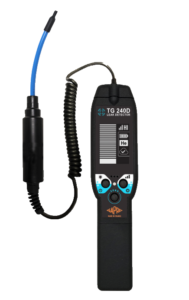
TG-240D
A rugged handheld that uses a thermal conductivity cell to find micro-leaks in helium, hydrogen and a wide range of other gases.
- Graduated display and rising alert tone
- Automatic zero on ambient air
- Protective storage case, 12-month warranty
Calculate your payback
At $450 for helium and $85 for hydrogen/nitrogen, you save $365 on every cylinder. Enter your own numbers to see when the switch pays for itself.
Gas prices reflect typical cylinder costs. Use your H2Leak equipment quote and your own yearly usage for an exact figure.
About 4 months at your usage
Making the switch is simple
Your technicians keep the same approach. Only the gas and the detector change.
Pick your detector
DXH-240 for hydrogen only, DXR-240 if you also want refrigerant detection, or Hydro-Lok for underground pipe.
Order tracer gas locally
Ask your gas supplier for 5% hydrogen / 95% nitrogen, often sold as forming gas.
Test the same way
Pressurize, sniff, pinpoint. The workflow your techs already know carries straight over.
Start saving
At $365 saved per cylinder, the change pays for itself after about four tanks of helium.
Common questions
Is hydrogen tracer gas safe to use?
The standard tracer gas is 5% hydrogen in 95% nitrogen, a non-toxic, non-flammable mixture used widely in industrial leak testing.
Will I lose sensitivity compared to helium?
No. The DXH-240 detects 1×10⁻⁵ cc/s with hydrogen/nitrogen tracer gas, the same figure the TG-240D achieves with helium. Hydrogen’s much lower background in air also helps you see small signals clearly.
Does hydrogen move through leaks like helium?
Yes. Hydrogen is the smallest, lightest molecule, so it flows through leak paths much like helium does. Your technique doesn’t need to change.
Which detector should I choose?
If you only need tracer gas detection, the DXH-240. If your systems sometimes still hold refrigerant, the DXR-240 does both. For buried water, gas or pool lines, the Hydro-Lok. If a job requires helium, the TG-240D.
Where do I buy hydrogen tracer gas?
Most industrial and welding gas suppliers carry 5% hydrogen / 95% nitrogen. Ask for “forming gas” or “hydrogen tracer gas.”
Ready to cut your leak-detection costs?
Tell us what you’re servicing and we’ll match a detector to the job and help your team switch from helium to hydrogen.
Request a quote