Comparison in Leak Detection Technologies
Being successful in detecting leaks in underground applications by plumbing and leak detection professionals requires fast and accurate leak location. Proper equipment and method go a long way in achieving the fast and accurate. Information on this page provides comparisons in technique, speed and cost for hydrogen tracer gas method, helium tracer gas method and acoustic leak detection.


Comparison Table 1: Hydrogen vs. Helium vs. Acoustic Leak Detection
| Feature | Hydrogen Tracer Gas | Helium Tracer Gas | Acoustic Leak Detection |
|---|---|---|---|
| Detection Method | Escaping hydrogen gas detected above leak | Escaping helium gas detected above leak | Detects sound generated by pressurized water escaping |
| Typical Accuracy | Excellent | Excellent | Good to Excellent (depends on conditions) |
| Small Leak Detection | ★★★★★ | ★★★★★ | ★★★☆☆ |
| Plastic Pipe Performance (PVC, HDPE, PEX) | Excellent | Excellent | Fair |
| Metal Pipe Performance | Excellent | Excellent | Excellent |
| Works Under Concrete | Excellent | Excellent | Good |
| Works Under Asphalt | Excellent | Excellent | Good |
| Deep Buried Pipelines | Excellent | Excellent | Fair |
| Low Water Pressure Systems | Excellent | Excellent | Poor |
| Requires Pressurized Water? | No | No | Yes |
| Environmental Safety | Safe (95% Nitrogen / 5% Hydrogen) | Safe | Safe |
| Equipment Cost | Moderate | High | Moderate |
| Operating Cost | Low | Higher | Low |
| Detection Speed | Fast | Fast | Moderate |
| False Positives | Very Low | Very Low | Moderate |
| Best Overall Rating | ⭐⭐⭐⭐⭐ | ⭐⭐⭐⭐☆ | ⭐⭐⭐☆☆ |
Comparison Table 2: Best Technology by Application
| Application | Hydrogen Tracer Gas | Helium Tracer Gas | Acoustic Detection |
|---|---|---|---|
| Residential Water Service Lines | ✅ Best Choice | Excellent | Good |
| Municipal Water Mains | ✅ Best Choice | Excellent | Good |
| Plastic Water Pipes | ✅ Best Choice | Excellent | Fair |
| Copper Water Lines | Excellent | Excellent | Excellent |
| Irrigation Systems | ✅ Best Choice | Excellent | Fair |
| Slab Leaks | Excellent | Excellent | Good |
| Fire Protection Piping | Excellent | Excellent | Good |
| Industrial Process Water | Excellent | Excellent | Good |
| New Pipeline Installation Testing | ✅ Best Choice | Excellent | Not Recommended |
| Leak Confirmation Before Excavation | ✅ Best Choice | Excellent | Good |
Comparison Table 3: Advantages and Limitations
| Technology
|
Major Advantages
|
Limitations
|
|---|---|---|
| Hydrogen Tracer Gas | Highest sensitivity, works on all pipe materials, effective with low pressure, fast leak location, lower gas cost, environmentally friendly | Requires isolating and introducing tracer gas into the pipeline |
| Helium Tracer Gas | Extremely accurate, inert gas, effective for very demanding applications | Higher gas cost, helium supply fluctuations, more expensive equipment |
| Acoustic Detection | Fast for metallic water lines, no tracer gas required, familiar technology | Performance decreases on plastic pipe, noisy environments, deep burial, saturated soils, and low-pressure systems |
Comparison Table 5: Cost Comparison
| Cost Factor | Hydrogen | Helium | Acoustic |
|---|---|---|---|
| Equipment Investment | $$ | $$$$ | $$$ |
| Gas Cost | Low | High | None |
| Labor Time | Low | Low | Moderate |
| Excavation Cost | Lowest | Lowest | Higher |
| Overall Cost per Leak Investigation | Lowest | Higher | Moderate |
Cost of an H2Leak Hydro-Lok Underground Hydrogen Leak Detector is priced at $2950 USD. Current Hydrogen gas cost surveyed by H2Leak in Spring 2026 is $75-85 a cylinder. Helium gas cost is 4-5X the cost of hydrogen tracer gas mixture(5% Hydrogen/95% Nitrogen). Hydrogen tracer gas leak detection has the lowest equipment cost and lower tracer gas cost than Helium.
Comparison of Tracer Gas Properties
| Property | Hydrogen (H₂) | Helium (He) | Why It Matters |
|---|---|---|---|
| Molecular Weight | 2.016 g/mol | 4.003 g/mol | Lighter gases rise and diffuse rapidly through soil and building materials. Hydrogen is about twice as light as helium. |
| Molecular Size | Very Small | Slightly Larger | Smaller molecules escape through extremely tiny leak openings. Hydrogen is the smallest molecule in nature. |
| Diffusion Rate | Very High | High | Faster diffusion allows gas to reach the surface more quickly after escaping a buried pipe. |
| Viscosity | Very Low | Low | Low viscosity helps gas flow through microscopic cracks and pinholes. |
| Permeability | Excellent | Excellent | Both gases migrate through soil, concrete, asphalt, and gravel much more effectively than water or air. |
| Natural Atmospheric Concentration |
~0.5 ppm | ~5.2 ppm | Low background concentrations allow highly sensitive detection with minimal interference. |
| Chemical Reactivity | Reactive as pure hydrogen, but safe in 5% forming gas | Chemically inert | Helium never reacts with surrounding materials. Forming gas (95% N₂ / 5% H₂) is non-flammable and widely used safely. |
| Non-Toxic | Yes | Yes | Safe for operators when used with normal ventilation practices. |
| Non-Corrosive | Yes | Yes | Will not damage piping or equipment. |
| Color | Colorless | Colorless | Does not stain or contaminate systems. |
For underground water line leak detection, hydrogen forming gas (95% nitrogen / 5% hydrogen) is often preferred because it provides performance comparable to helium while typically offering lower operating costs and excellent availability. Helium remains the benchmark for ultra-high-sensitivity applications such as vacuum systems, aerospace, and semiconductor manufacturing.
Why H2 & Helium Travel Better Than Water
Water tends to remain within the pipe or surrounding soil, asphalt and concrete because it has:
- Higher surface tension
- Greater viscosity
- Stronger adhesion to soil particles
Hydrogen and helium, by contrast:
- Move easily through soil pores.
- Rise toward the surface after escaping.
- Spread through dry or moderately moist ground.
- Can often be detected even when the leak is several feet underground.
This behavior is one reason tracer gas methods can succeed when there is little or no visible water at the surface.
Why Many Professionals Prefer Hydrogen Tracer Gas
Hydrogen tracer gas has become the preferred leak detection technology for many plumbing contractors, municipalities, and utility companies because it combines exceptional sensitivity with cost-effective operation.
Key advantages include:
- Detects extremely small leaks before they become major failures.
- Performs exceptionally well on PVC, HDPE, and PEX piping where acoustic methods often struggle.
- Minimizes unnecessary excavation by pinpointing the leak location.
- Works even when water pressure is too low for acoustic equipment.
- Uses a safe, non-flammable 95% nitrogen / 5% hydrogen forming gas.
- Lower operating costs than helium while providing comparable leak detection performance.
- Reduces labor hours and restoration costs on residential, commercial, and municipal projects.
Underground Pipe Hydrogen Leak Detectors
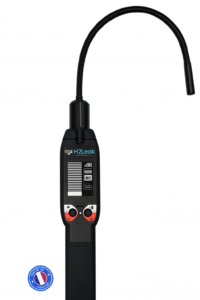
Hydro-Lok (SGD-240)
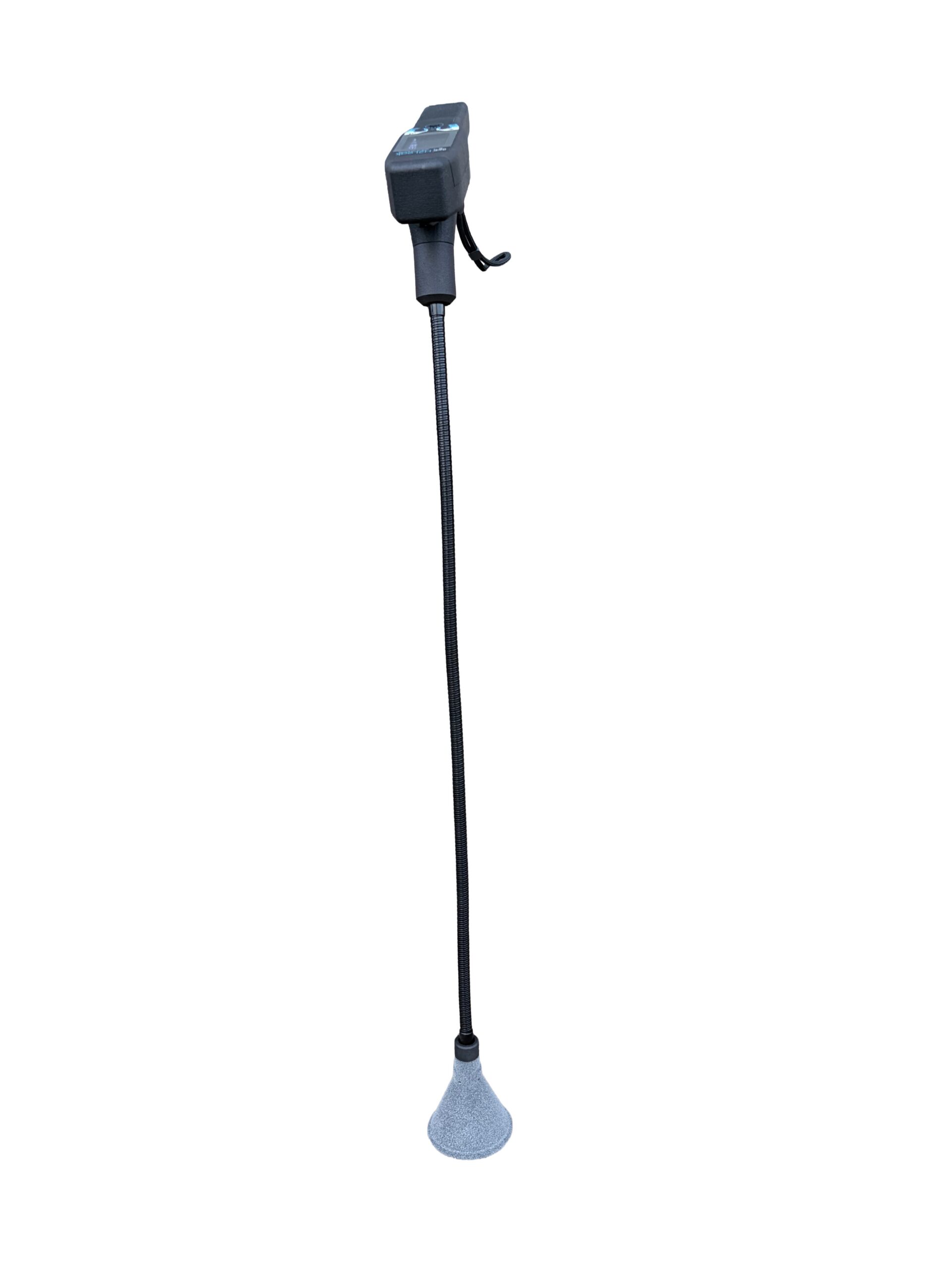
Our compact underground leak detector, the Hydro-Lok has a field replaceable flex hose and hydrogen sensor. Other features include:
- 3 Levels of sensitivity to help pinpoint exact leak locations quickly and accurately
- Graduated display and increasing frequency sound to H2 sensing
- Calibration and automatic zero on the ambient atmosphere.
- USB C type charging plug, full charge in approx. 12 hours
- Both cone and pinpoint tip
- Compact Protective Storage Case
- 12 Month Warranty
Handheld Hydrogen Leak Detector
DXH-240 Hydrogen Leak Detector
Hydrogen leak detector for HVAC, Automotive and other applications. Other features include:
- 3 Levels of sensitivity to help pinpoint exact leak locations quickly and accurately
-
1.10-5 cc/s for H2/N2 tracer mixture [equivalent to approx. 1 g/year refrigerant gas]
5.10-7 cc/s for H2 100% [equivalent to approx. 0.05 g/year refrigerant gas]
1 ppm H2 (1 ppm to 1000 ppm H2) - Graduated display and increasing frequency sound to H2 sensing
- Calibration and automatic zero on the ambient atmosphere.
- USB C type charging plug, full charge in approx. 12 hours.
- Protective Storage Case
- 12 Month Warranty